Eighty years, eight chapters
Every rule you'll learn exists because of something that happened first
This is that story — scroll through it.
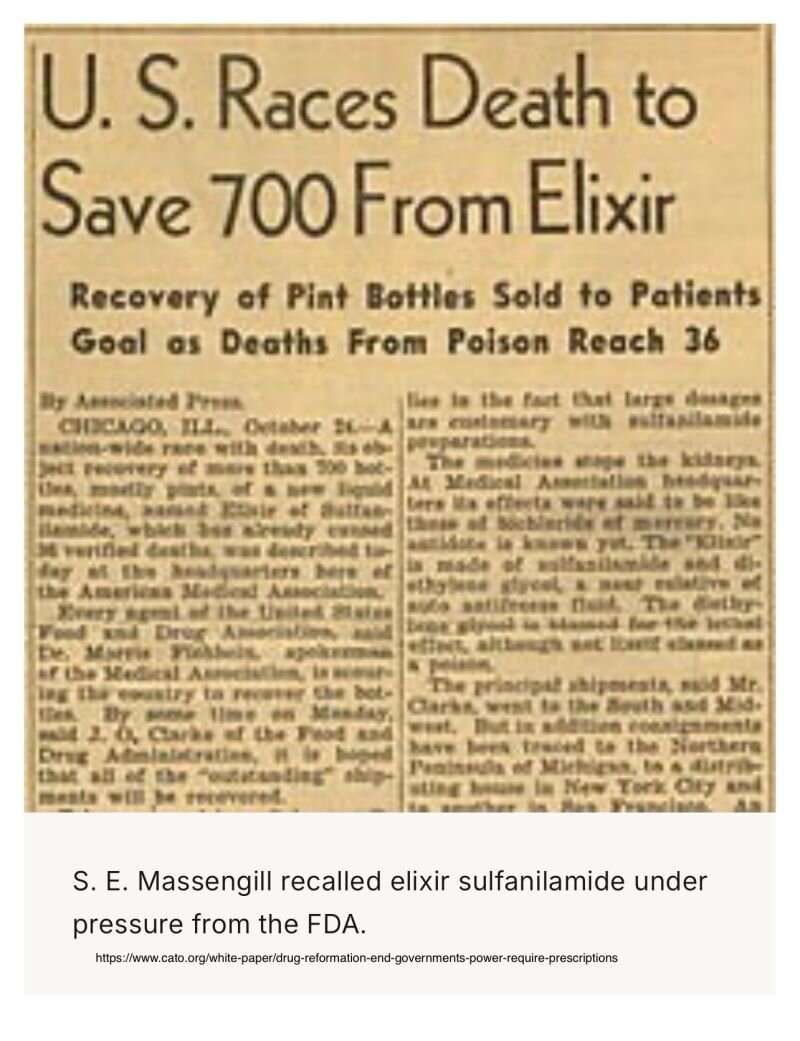
Associated Press, October 1937
The First Warning
A Tennessee drug company dissolves a new antibiotic in diethylene glycol — a sweet-tasting industrial solvent — to make it easier for children to swallow. Nobody tests it on animals first. Nothing requires them to.
Elixir Sulfanilamide reaches pharmacies across the country within weeks. Diethylene glycol is a potent kidney toxin. More than 100 people die, many of them children.
In 1938, Congress passes the Food, Drug, and Cosmetic Act — the first US law requiring a drug be proven safe before it can be sold at all.
1947
Never Again, In Writing
Doctors experimented on prisoners. No one had written down that this could never happen again.
"The voluntary consent of the human subject is absolutely essential." Point one, August 1947.
No legal teeth of its own — yet everything built on it since.
Scroll to explore ↓
Never Again, In Writing
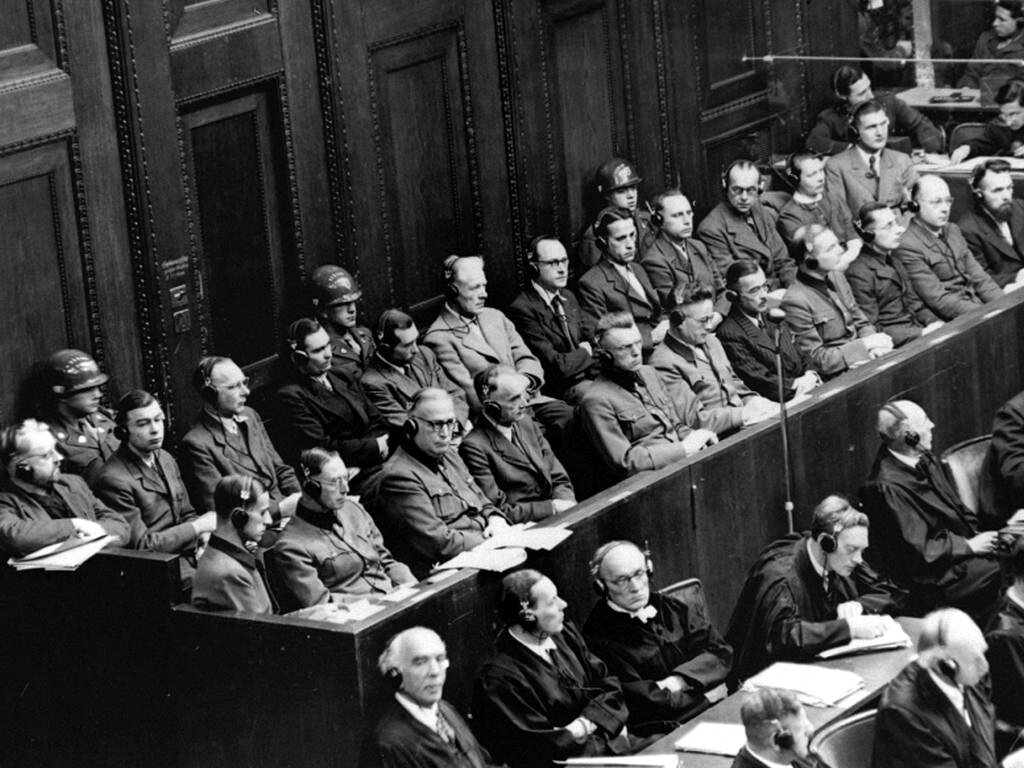
The Nuremberg trials confront the world with what happened when doctors experimented on prisoners without their knowledge or consent. Until this moment, there was no codified answer to what should never be allowed.
In August 1947, the tribunal’s judgment includes ten points — the Nuremberg Code. Point one: "the voluntary consent of the human subject is absolutely essential." The first time this idea is written into international law.
The Code has no direct legal enforcement mechanism. But it becomes the ethical foundation every research and pharmacovigilance framework since has built on.
It was drafted largely by two American doctors serving as expert witnesses at the trial. Despite that, it took over thirty years — until the Belmont Report — before the US built a comparable domestic research-ethics framework of its own.
1957–61
The Drug That Changed Everything
Marketed as safe for pregnant women. Never tested on a developing fetus.
10,000+ children born with severe malformations before it’s withdrawn in 1961.
One reviewer refused approval for over a year — and kept it off US shelves entirely.
Scroll to explore ↓
The Drug That Changed Everything
A new sedative is marketed across Europe as safe even for pregnant women, for morning sickness. It was never tested for effects on a developing fetus. Nothing required it to be.
Over the next four years, more than 10,000 children are born with severe limb malformations. Thousands more do not survive. The drug is withdrawn in 1961 — after the damage was already done.
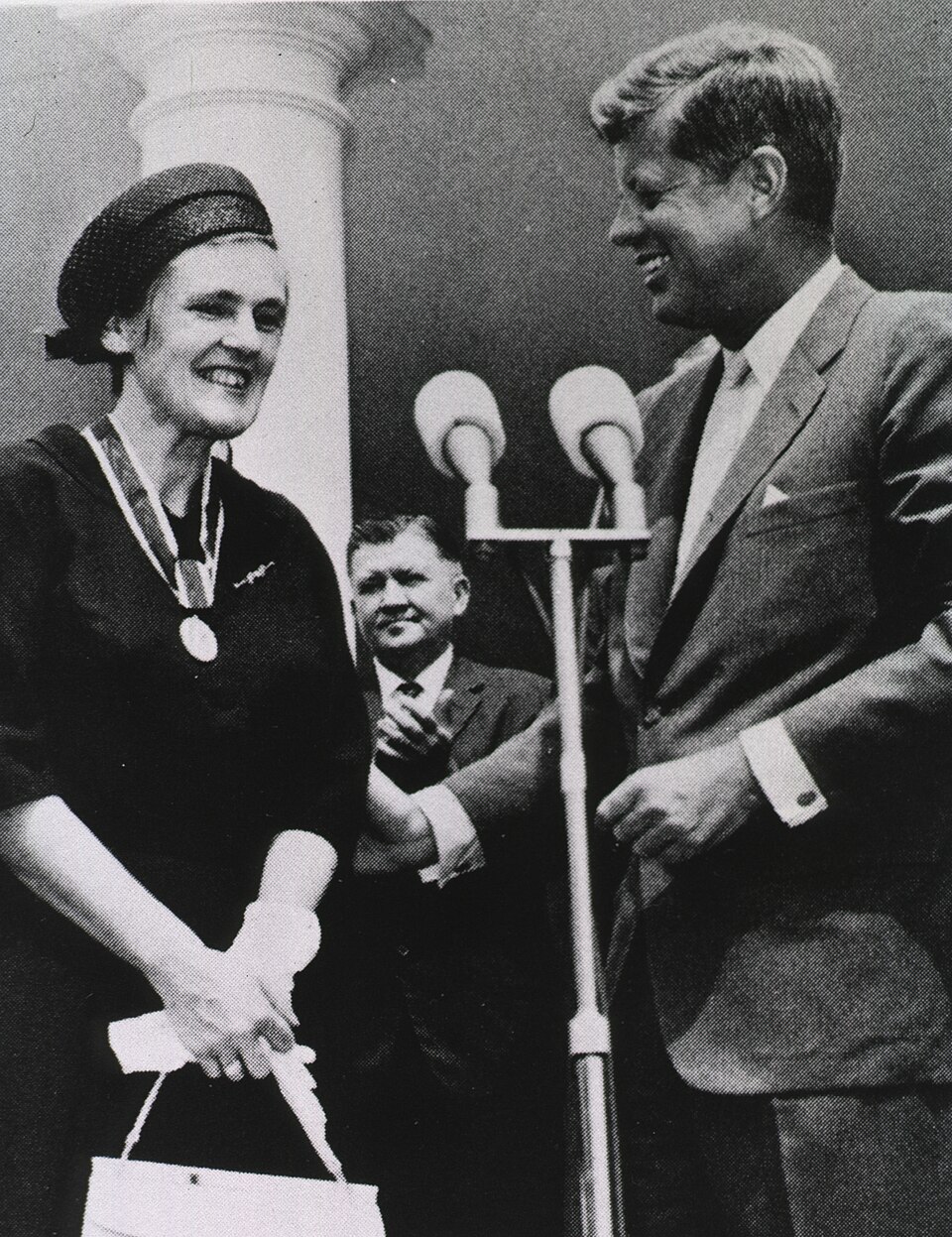
One person stops it reaching the US market at all: Dr. Frances Kelsey, an FDA reviewer who refused approval for over a year despite intense industry pressure.
Thalidomide was sold under more than 40 different brand names across different countries — part of why it took so long for doctors in different parts of the world to realize they were looking at the same drug.
White House official photo, public domain
Prove It Works, Prove It’s Safe
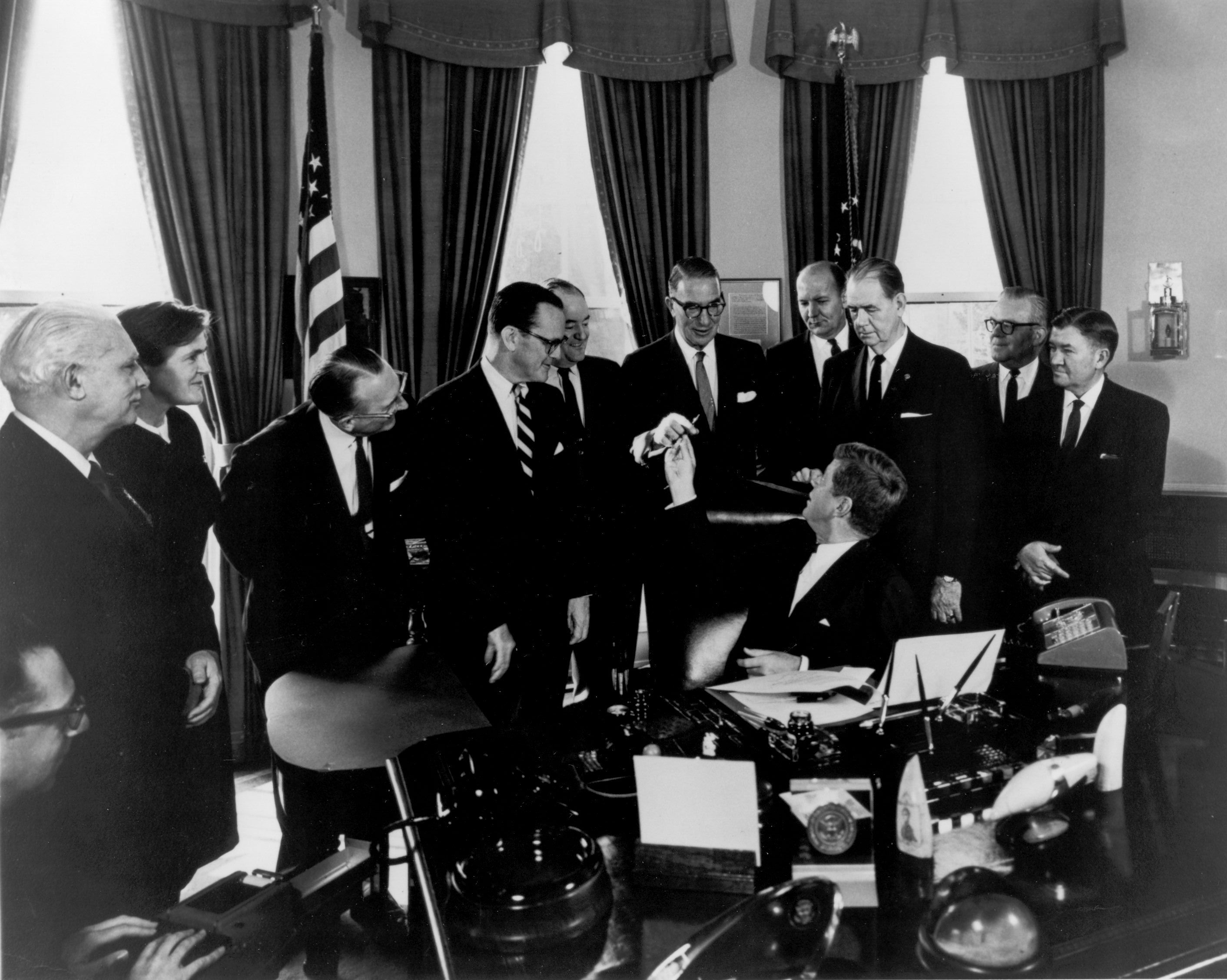
In direct response to thalidomide, the US Congress passes the Kefauver-Harris Amendment. For the first time, a manufacturer has to prove a drug actually works, not just that it’s safe.
It also formalizes something new: mandatory adverse event reporting. Manufacturers now have to tell the FDA when their drug hurts someone — the direct ancestor of the ICSR workflow this course teaches.
This is the moment pharmacovigilance stops being a moral obligation some companies chose to take seriously, and becomes a legal one every company has to.

A Living Standard
The World Medical Association convenes in Helsinki to turn the Nuremberg Code’s ten points into a living, updatable ethical standard for medical research involving human subjects.
It introduces the idea of an independent ethics committee reviewing research before it starts — not just trusting the researcher’s own judgment about what’s acceptable.
Unlike Nuremberg, Helsinki is designed to be revised. It has been updated many times since — most recently in 2024 — staying a living document instead of a historical artifact.

The World Starts Watching Together
The World Health Organization launches the Programme for International Drug Monitoring, starting with just 10 founding countries pooling their adverse-event reports together.
Uppsala, Sweden becomes the home of the Uppsala Monitoring Centre — still today the global hub processing reports from over 150 countries into VigiBase, the world’s largest ICSR database.
The insight that founded it still holds: a rare reaction invisible in one country’s data becomes an unmistakable signal once you can see the whole world’s reports at once.
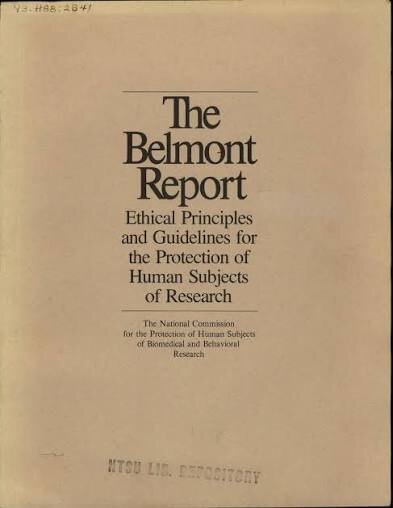
The National Commission for the Protection of Human Subjects of Biomedical and Behavioral Research, 1979
Respect, Beneficence, Justice
For forty years, the US Public Health Service withheld treatment from hundreds of Black men with syphilis in Tuskegee, Alabama — to study the disease’s progression, without their informed consent.
The public reckoning that follows leads, in 1979, to the Belmont Report — three principles that still sit underneath every research ethics committee on Earth: respect for persons, beneficence, and justice.
Belmont is not a footnote. It is the ethical spine of every informed-consent form, every IRB review, every safety-monitoring commitment made since.
Today
Where You Come In
AI now suggests codes, drafts narratives, flags duplicates — faster than any chapter before this one.
Every regulator still requires what Nuremberg first insisted on: a trained human, checking the work.
The tools changed. The principle didn’t.
Scroll to explore ↓
Where You Come In
A case processor works alongside AI that suggests codes, drafts narratives, and flags likely duplicates — faster than any of the people in the chapters before this one could have imagined.
But every regulator on Earth still requires the same thing Nuremberg first insisted on: a trained human, checking the work, before it affects a real patient. The tools changed. The principle didn’t.
That’s the story this course actually teaches — not just the definitions, but the eighty years of hard-won reasons behind them.
CIOMS Working Group XIV — the body behind the current international governance framework for AI in pharmacovigilance — only published its final report in December 2025. The rules for the tools described here are barely a few months old.

Now you know why
Every definition in Module 1 just got a lot heavier
The 11-step workflow, the SUSAR clock, the human-in-the-loop requirement on every AI tool — none of it is arbitrary. Start the course and see exactly how it all connects.
Start Module 1 →